Sound bridges can lead in or out of a scene. They can occur at the beginning of one scene when the sound from the previous scene carries over briefly before the sound from the new scene begins. Alternatively, they can occur at the end of a scene, when the sound from the next scene is heard before the image appears on the screen.
Tuesday, 9 October 2012

Sound Motif
A sound effect or combination of sound effects that are associated with a particular character, setting, situation or idea through the film.
The sound motifs prepare the audience emotionally for the arrival, or actions of a particular character. The sound motifs can be very useful in the rough cut, and provide a sound association for those characters as we move through the story.
Sound Effects
Sound effects are artificially created or enhanced sounds, or sound processes used to emphasize content of films, television shows and other media. In motion picture and television production, a sound effect is a sound recorded and used to make a specific atmosphere without the use of dialogue or music.
Asynchronous sound
Asynchronous sound effects are not matched with a visible source of the sound on screen. Such sounds are included so as to provide an appropriate emotional nuance, and they may also add to the realism of the film.
e.g A film maker might include the background sound of an ambulance's siren while the foreground sound and image portrays an arguing couple. The asynchronous ambulance siren highlights the emotional injury from the argument
e.g A film maker might include the background sound of an ambulance's siren while the foreground sound and image portrays an arguing couple. The asynchronous ambulance siren highlights the emotional injury from the argument
Visual Effetcs
This is a part of post production, It is the manipulating of pre-recorded footage to add effects. Visual effects involve the integration of live-action footage and generated imagery to create environments which look realistic, but would be dangerous, costly, or simply impossible to capture on film.
In this case all the robots and the majority of the destruction is added.
In this case all the robots and the majority of the destruction is added.
Post Production
Post production is the stage of film making that occurs after filming has ended this includes tasks such as the editing of raw footage to cut scenes, insert transition effects, working with voice and sound actors, and dubbing.
Post production in this example is all the editing which adds all the robots to the seances and completes the film.
Post production in this example is all the editing which adds all the robots to the seances and completes the film.
Ellipsis
A term that refers to periods of time that have been left out of the narrative. The ellipsis is marked by an editing transitions which, while it leaves out a section of the action, none the less signifies that something has been elided. The fade or dissolve could indicate a passage of time, a wipe or a change of scene etc.
Slow Motion
Movements on the screen appearing slower than they would in actual life. For example, a person getting punched the viewer is forced to see the punch coming, and realize some pain and injury is coming, then see the injury and pain, rather than noticing a punch and then giving attention to the next scene.
Slow motion is used to show the detail and emphasize emotions connected with a slow-motion punch, or kiss, or stab etc.
Slow motion is used to show the detail and emphasize emotions connected with a slow-motion punch, or kiss, or stab etc.
Superimposition
In filming, superimposition is the placement of an image or video on top of an already-existing image or video, usually to add to the overall image effect, but also sometimes to conceal something.


Colour Design
Colour design is the usage of colours in a scene or objects in a scene, this can be used to show personalities or traits etc. of characters. This can also be used to set the mood of a scene a dark scene with people wearing dark clothing in dimmed light would suggest that they are trying to hide or avoiding someone or something. In terms of personalities this can be used with clothing, a character wearing bright colours would show them to be a happy person who isn't shy where as a character who is always seen wearing dark colours with dark hair would show a sneaky or shy personality.


Monday, 8 October 2012
Lighting
The intensity, direction, and quality of lighting have a large effect on the way an image is perceived.
The lighting can be used to direct attention of a user towards a part of the set or character. Most films use the three point lighting style other types of film like documentaries use natural light to create a realistic scene.
The lighting can be used to direct attention of a user towards a part of the set or character. Most films use the three point lighting style other types of film like documentaries use natural light to create a realistic scene.
Properties (Props)
Props are the items used on set the scene but can also be given to characters, Characters can be given a prop that provides additional information about the character itself or the action taking place. Props can also provide addional information about location or time period.


Costume and Make up
Costume and makeup simply refers to the clothes or outfits that the characters wear and the makeup that is used on them. Costume is generally used to signify a characters lifestyle be it upperclass or poor but can also be used to show what type of person a character is. Makeup is used alongside the costume to add to this effect.
The characters below are from the period drama Downton Abbey the costumes and makeup in this production are very detailed as they have to recreate a certain period in time.

The characters below are from the period drama Downton Abbey the costumes and makeup in this production are very detailed as they have to recreate a certain period in time.

Wednesday, 3 October 2012
Set Design
The set design is the focus on the design of the set of a scene, This concentrates on creating a set that is accurate to the surroundings and the time in which the scene is meant to be filmed. e.g An apartment scene, This would need to be accurate to the time in which the scene is meant to be taking place, A modern apartment scene must have props that are matched to the time, An old apartment scene must have period props.
The image below shows a burt out bus used to show the scene of destruction.
The image below shows a burt out bus used to show the scene of destruction.
Studio
A studio can be used to create a location otherwise non existent or unreachable for filming. Detailed sets are created to make the audience believe that this location exists or that it was filmed on site.
The video below shows the studio or set of new york city, They aren't actually in new york but the scene is created to fool the audience that these machines were actually there.
The video below shows the studio or set of new york city, They aren't actually in new york but the scene is created to fool the audience that these machines were actually there.
Location
The overall design of a location can change feelings or emotions in a scene or how we come to understand events or actions this is important because it can show the emotions of a character or change the idea of a character for the audience.
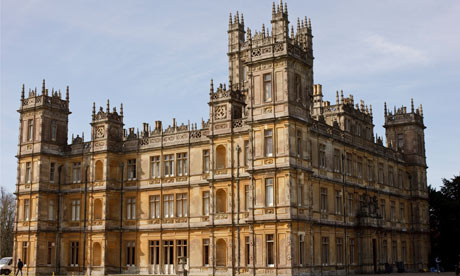
The image below shows the building used in the drama Downton abbey, This is a building which was built in the time the show is set, This adds to the recreation of the time period and adds to the overall detail in the show.
Product Design
Production design is the creation of the set or surrounding of the scene in which filming will take place.
This can be used to enhance the scripts of a production using visual elements.
This can be used to enhance the scripts of a production using visual elements.
Tuesday, 2 October 2012
Synchronous sound
Synchronous sound is when the sound that is in a scene can be linked to something in a scene e.g Someone talking to the sound coming from their voice.
Non Diegetic Sound
Non Diegetic Sound, Is sound which the source cant be seen or isn't involved with the scene.
e.g Background music, or in the case of peep show the audiences' laughter in the background.
Monday, 1 October 2012
Diegetic Sound
e.g In this clip the source of the sound is always involved in the scene, People talking in the back ground or just the main characters themselves, there is no background music or sounds unrelated to this scene.
Saturday, 29 September 2012
Sound Perspective
The sense of a sound's position in a scene e.g Editing a sound to add a range between it and the main point of the filming like someone on the other side of a room or someone far away shouting, The volume of the sound would be edited to fit this.
Sound Mixing
Audio mixing for film and television is a process during the post-production stage of editing which multiple recorded sounds are combined into one.
Eyeline Match
This uses the audience’s ability to assume things. This series of shots usually shows someone looking at something and then what exactly they are looking at. In this way the auience can see exactly what the character is seeing and what the director wants them to see
Wide Shot
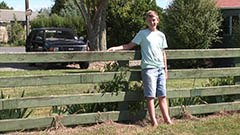
In the wide shot, the subject takes up the full frame. In this case, the boy's feet are almost at the bottom of frame and his head is almost at the top. The main object/character doesn't take up the whole width and height of the frame, since this is as close as the camera can get without losing any part of him.
Thursday, 27 September 2012
Wipe
2:11
A wipe is one shot taking place of another from one side of the viewers screen. Another type of wipe is using objects from a scene as a solid object to bring in the new scene from behind or the expansion of a scene or object from a centre point on the screen.
Fade In / Fade Out
0:12
This transition occurs when the picture on the screen gradually changes to one colour or another scene, this is generally used at the start of a new area of a scene. Fade outs are usually found at the end of a scene/film.
Wednesday, 26 September 2012
Insert
4:43
An insert is cutting from a certain camera angle in the main scene to another camera angle in the main scene. They are used to emphasise a different part of a shot.
Parallel Editing
0:15
Parallel editing is filming two clips or scenes and editing them together even though they may be in completely different locations.
In this clip it is used to show the fight that both officers are involved in and to show the speed of all the actions happening.
Parallel editing is filming two clips or scenes and editing them together even though they may be in completely different locations.
In this clip it is used to show the fight that both officers are involved in and to show the speed of all the actions happening.
Friday, 21 September 2012
Crosscutting
1:11
CrossCutting is when two action shots are put together to create a connection between the two.
The camera cuts away from one action scene to another.
Jump Cut
0:28
The jump cut is when the camera is facing an object or character in a scene the cut is when the camera angle changes slightly to show that the character has changed position.
In this scene the jump cut is used to show the fast paced actions of the character and the force of another character hitting the ground.
Thursday, 20 September 2012
Action Match
0:43
The action match is a cut just before or at the start of an action shot. Cutting on action gives the effect that time has passed or that something in the previous scene has come to an end.
In this scene it was used to show that the man had just been eaten and rather than end the suspense by just cutting to another scene the scene is cut just before the man is killed and then the suspense is carried over to the new scene.
In this scene it was used to show that the man had just been eaten and rather than end the suspense by just cutting to another scene the scene is cut just before the man is killed and then the suspense is carried over to the new scene.
Graphic Match
0:24
The graphic match is a cut which uses objects or characters in the scenes match but are in different surroundings. e.g the people are all running just in different backgrounds.
In this scene is was used to show the speed of the characters running and being a trailer show to the user of a fast paced intense show to come.
In this scene is was used to show the speed of the characters running and being a trailer show to the user of a fast paced intense show to come.
Wednesday, 19 September 2012
Crane

It is also used to move the camera away from a scene which is a common way of ending a movie. It is often used in scenes where there is emotion or suspense.
Handheld

The handheld gives the perspective of a characters view often a camera shake is added and is shown here by the addition of the reflection in the window.
Zoom
3:22
Zoom is used to give objects or characters perspective e.g a background object in relation to a foreground object.
Zoom is used to give objects or characters perspective e.g a background object in relation to a foreground object.
Steadicam
14:15
The Steadicam is used to create a smooth shot on a surface which is unstable or to rough to otherwise do so.
The Steadicam is used to create a smooth shot on a surface which is unstable or to rough to otherwise do so.
Friday, 14 September 2012
Voiceover
A voice-over is a type of Asynchronous sound, The source of the voice cannot be seen on screen. This can be used to narrate a scene or can be the voice of one of the main characters as they narrate what is happening from their point of view.
Eyeline Match

The eyeline match assumes the audience want to see what is in the characters line of sight. The camera will show the eyes of the character then cut to whatever is in their line of sight.
Shot/Reverse Shot

The shot/reverse shot is when the camera focus changes from one character to another. It shows the point of view of both characters.
Editing and Representation
1) What is meant by transition of image and sound?
The transition of image and sound is the way in which clips and soundtracks are put together in the editing stage of a film. The way in which they are placed together can be used to create effects or set the pace of a scene.
2) Explain in your own words, why editing is so important?
Editing in a movie is used to take what are plain pieces of recording and give them context and represent certain characters or scenes.
Cutaway
In film and video, a cutaway shot is the interruption of a continuously filmed action by inserting a view of something else. It is usually, although not always, followed by a cut back to the first shot, when the cutaway avoids a jump cut.The cutaway shot does not necessarily contribute any dramatic content of its own, but is used to help the editor assemble a longer sequence.
2:30
2:30
Dissolve
In the post-production process of film editing and video editing, a dissolve is a gradual transition from one image to another. The terms fade-out and fade-in and are used to describe a transition to and from a blank image.
2:30
2:30
Wednesday, 12 September 2012
Sunday, 9 September 2012

Tilt

The camera tilt is used to show instability in a scene, in the scene above the character is fleeing from an animal in desperation, the camera tilts as it breaks open the door to show the force of the animal compared to the insignificance of the character.
Pan
1:37,
A camera pan is where the camera movies horizontally to show a large object or moving object/person moving. In the picture above the camera pans a city skyline to show desertion and emptiness during an apocalypse.
Low Angle

The picture above is of a car chase scene where the low angle is used to show the speed of the cars involved in the chase.
Canted Angle

Canted angles is when the angle of the shot is placed non horizontal to the floor this is mainly used in horror movies to show desperation or to show a character being frantic.
In the scene above it is used to show the breakdown of normal life during an apocalypse.
High Angle

A high angle is used to show an object or character in a different perspective, To make them seem less significant or to make them seem separated from the main characters. In this scene it is used to make the two characters shown look mischievousness as the high angle shot is taken from beside the police officers.
Friday, 7 September 2012
Over The Shoulder

An over the shoulder shot can be used to sway the favour of the audience towards a certain character in a fight etc. or can be used to show the emotion of one character from the perspective of another. In this scene the shot is used to put favour in the argument towards the woman.
Point Of View

The point of view shot is used to show a characters vision of something that is happening, It can be used to bring the viewer deeper into the perspective of that character and help them understand any emotions that they may be having. This shot shows the point of view of the character watching a strange creature walking into the elevator, It shows the helplessness as the steel doors close shutting the character out of the situation.

Aerial Shot

This shot can be used to show large areas to set a scene or show the insignificance of someone/something in a large area. In the picture above the aerial shot is used to show the normal lives of people going by while the character is clearly stressed and is facing a problem which normal people wouldn't have.
Two Shot

The two shot can be used to show a relationship between two characters, the two characters walking side by side shows a good relationship between the two where as if the relationship was damaged or there was tension and anger between the two one of the characters would be walking a bit behind the other.
This is used in this scene to show the good relationship between the two characters also to highlight the satisfaction of what they have just done.
Thursday, 6 September 2012
Long Shot

Medium Shot

A medium shot shows most of the main object/person in a scene unlike a close up which shows mainly the head area and not much background or the long shot which shows more background. This shot can be used to show the expression of a character while still setting a scene by showing the background.
Close Up

The close up shot is used to frame a character or characters and capture emotion without showing the background of the scene. All of the focus is on the centre of the close up shot and immerses the viewer.
In this scene the close up shot is used to directly show the tension between the two characters the close up makes the viewer feel like they are part of the story.
Extreme Long Shot
An extreme long shot is used to set the scene of a section of film, The location that the current scene is taking place. The camera is at a large distance from the focus of the scene. It shows a secluded, small town or village this suggests that this is a local community where everyone is very close and that whatever is about to unfold involves someone from their community. This shot may suggest a sense of mischief as the person at 0:18s is the only seen person in such a vast shot of landscape.
Subscribe to:
Posts (Atom)